



Key Points
- Dirty evaporator and condenser coils force your AC to work harder, driving up energy use and utility costs
- Fort Lauderdale’s humidity and salt air speed up coil buildup compared to drier climates
- Warning signs include a constantly running fan, weak cooling, and unexpectedly high energy bills
- Coil cleaning involves delicate components and refrigerant lines that are easy to damage without proper training
- Professional AC coil cleaning restores efficiency and helps prevent premature compressor failure
Fort Lauderdale summers bring more than heat. The humidity rolling in off the coast keeps homes muggy well into the evening, and that combination puts extra strain on air conditioning systems. When a system suddenly stops keeping up, dirty coils are often the reason.
In our service calls throughout Fort Lauderdale, we regularly find that coil buildup is the hidden cause behind weak airflow and rising utility bills. Understanding how these coils work, and why they get dirty so quickly in South Florida, helps homeowners know when it’s time to call for AC maintenance in Fort Lauderdale.
Understanding the Role of Air Conditioner Coils
Every air conditioner relies on two coils to move heat out of your home: the evaporator coil and the condenser coil. When your system runs, the indoor fan pulls warm, humid air across the evaporator coil, where refrigerant absorbs the heat and turns to gas.
The compressor then pressurizes that gas and sends it to the condenser coil outside, where the heat releases into the outdoor air and the refrigerant returns to a liquid state. This cycle repeats continuously, and any buildup on either coil disrupts the heat exchange your system depends on.
Why Coils Get Dirty Faster in South Florida
Homes near Rio Vista and Victoria Park deal with a particular challenge: salt air and heavy humidity accelerate dust and grime accumulation on outdoor condenser coils. According to the U.S. Department of Energy, dirty coils can lower a cooling system’s efficiency by significantly increasing the energy it uses.
Indoor evaporator coils face a different problem. Central Florida’s near-constant air conditioning use means these coils rarely get a break, and dust, pet dander, and general household debris settle on them steadily over time. Left unaddressed, this buildup insulates the coil and makes it harder for refrigerant to absorb heat efficiently.
Signs Your AC Coils Need Attention
Based on what we see in Fort Lauderdale properties, a few warning signs consistently point to dirty coils:
- The fan runs constantly but never seems to catch up
- Rooms stay warm even after hours of continuous operation
- Energy bills climb noticeably without a change in usage habits
- Ice or frost forms on the indoor unit or refrigerant lines
- Airflow from the vents feels weaker than usual
If any of these sound familiar, it’s worth having a technician inspect the coils before the problem worsens.
Why Coil Cleaning Isn’t a DIY Project
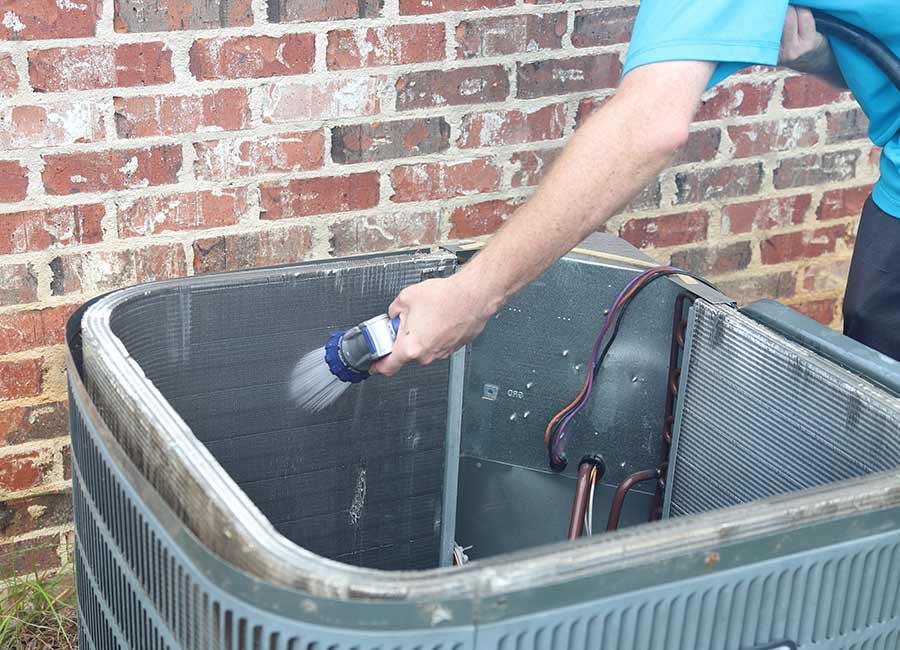
Coils are delicate. Evaporator coils have thin aluminum fins that bend easily, and improper cleaning can crush them or damage the tubing that carries refrigerant. Condenser coils sit near electrical components and a running compressor, which makes safety a real concern for anyone without proper training.
Using the wrong cleaning solution, applying too much pressure, or skipping the disconnection steps can turn a routine cleaning into an expensive repair. Our technicians follow AC coil cleaning procedures designed to clean thoroughly without putting the coil, the refrigerant lines, or the surrounding components at risk.
The Cost of Skipping Coil Maintenance
The U.S. Energy Information Administration notes that air conditioning accounts for a substantial share of residential energy use across the country, which means even a modest efficiency loss from dirty coils shows up quickly on a Fort Lauderdale utility bill. Beyond the added cost, a system working harder than it should also faces more wear on the compressor, often shortening its lifespan.
Regular coil cleaning, paired with routine maintenance, keeps your system running the way it was designed to and helps you avoid a mid-summer breakdown when temperatures near Las Olas Boulevard and the surrounding neighborhoods are at their peak.
Keeping Your Fort Lauderdale System Running Efficiently
Dirty coils are one of the most common, and most preventable, causes of AC performance problems in South Florida. Catching the early signs and scheduling professional cleaning before the buildup worsens keeps your system efficient and helps protect it from costlier repairs down the road.
If you’re noticing any of the warning signs above, our team can inspect your coils and get your system back to full performance. Schedule your service today and let our Fort Lauderdale technicians handle the rest.
FAQ
How often should AC coils be cleaned?
Most Fort Lauderdale homes benefit from a coil inspection and cleaning at least once a year, ideally before the peak summer season begins.
Can dirty coils cause my AC to freeze up?
Yes. Reduced airflow from dirty coils can cause the evaporator coil to get too cold, leading to ice buildup on the coil and refrigerant lines.
Will cleaning my coils lower my energy bill?
Clean coils allow your system to transfer heat efficiently, which typically reduces the runtime needed to cool your home and lowers energy costs.
Is coil cleaning included in a standard AC maintenance visit?
Yes, coil inspection and cleaning are typically part of a comprehensive AC maintenance visit, along with checks of refrigerant levels and other key components.
How do I know if my coils are dirty without opening the unit?
Signs like weak airflow, longer cooling times, and rising energy bills often point to dirty coils, even without a visual inspection.